Approaching the home loan process with confidence
Compare home loans, choose a responsible lender, and understand each step — from preapproval to closing.

When you look for a responsible lender, look for a lender that:
- Is established and reputable
- Is willing to answer your questions
- Provides details in writing
- Gives you time to decide
Also ask trusted sources for referrals.
Steps in the mortgage loan process
Below is a simple, beginner-friendly overview of the typical home loan (mortgage) process.
1. Get prequalified: Before you apply, a lender can prequalify you by estimating how much you may be able to borrow, based on financial information you self-report.
2. Complete the application: Your lender will help you fill out a loan application.
3. Get preapproved: After you apply and the lender takes a close look at your credit, they can provide a written preapproval letter that states how much they might lend you for a home.
With preapproval in hand, you’re ready to look for your new home. Preapproval:
- Helps you narrow your search to properties in your price range
- Gives you confidence that you may be able to secure a home loan for a specific amount
- Reassures sellers that your offer is serious because your financing is already in progress
- Helps speed the mortgage process once you’ve found a home to purchase
The lender will consider final approval later, after you’ve found the home you want to buy.
4. Loan processing. Your lender collects the financial documents needed to process your loan. The property is appraised to determine its fair market value.
5. Loan decision (approval or decline). The lender reviews your application and financial information to make their lending decision. If your application is declined, they may recommend steps you can take to obtain financing.
6. Pre-closing (loan settlement). Your home mortgage consultant works with you to secure any required title insurance and real estate documents to protect against other parties claiming ownership of the property.
7. Closing (settlement). The day and time when final mortgage documents are signed and required payments are transferred to complete the purchase of a house.
8. Home loan servicing. The work that happens after closing until the loan is paid off — billing, collecting payments, and making contract changes. Loan servicing is often transferred between companies during the life of a loan.
Types of mortgages
Here’s a summary of the most widely available mortgage programs. These types can overlap (for example, a lender may offer an adjustable-rate Federal Housing Administration [FHA] loan). For details, ask mortgage financing experts — they can help you choose a loan that fits your needs.

30-year fixed-rate mortgage
Interest rate (and monthly principal and interest payments) remain the same (fixed) for the life of the loan. If payments are made as agreed, the loan balance will be $0 at the end of the term.
- Customer benefits: Provides protection against rising interest rates. Predictable payments make budgeting for the future easier.
- Homebuyer’s scenario: Especially attractive in a low-interest-rate environment. Ideal if you plan to stay in your new home for a long period of time, have a fixed or slowly increasing income, and have a lower tolerance for financial risk.
15-year fixed-rate mortgage
Interest rate remains the same for the life of the loan; typically, slightly lower interest rates than 30-year fixed.
- Customer benefits: The loan is paid off sooner, saving substantial money in interest payments over the life of the loan.
- Homebuyer’s scenario: Investment-minded homebuyers who can or wish to make higher mortgage payments can build equity faster.
Adjustable-rate mortgage (ARM)
Interest rate (and monthly principal and interest payments) adjusts periodically based on an index. The initial rate can be locked in for different periods. Some lenders offer introductory periods of one, three, five, seven, or ten years. Typically, the rate readjusts every 6 to 12 months after the introductory period.
- Customer benefits: The initial interest rate (and monthly payment) is usually lower than that of a fixed-rate mortgage, after which the rate adjusts periodically, based on a market index. The loan may contain periodic and lifetime caps that limit how much the rate can increase.
- Homebuyer’s scenario: An ARM may be a good choice for borrowers who plan to live in their home for a short period of time or can manage to make larger monthly payments after the rate adjusts.
Balloon loan
Offers fixed payments for a period of time (usually 5 to 7 years), followed by one large payment, known as a balloon payment, of the remaining loan balance. The amount of the monthly payment is not sufficient to repay the balance during the scheduled term. For example, the payments are based on a 30-year term; however, the loan is due and payable in 5 years.
- Customer benefits: Interest rate is typically lower than that of a 30-year fixed-rate loan.
- Homebuyer’s scenario: An option for homebuyers who are certain they will move or refinance in 5 to 7 years.
Renovation loan
Finances the purchase of a home and provides the additional funds to improve or renovate it.
- Customer benefits: The amount of money that can be borrowed is based on the future value of the home after improvement.
- Homebuyer’s scenario: Intended for a homebuyer looking to purchase a “fixer-upper” or a house that requires remodeling to accommodate family needs.
Construction loan
Offers two types of programs: one that finances the purchase of a newly constructed home and one that finances the actual construction plus the purchase of the finished home.
- Customer benefits: Loans for new construction may offer options such as an extended rate lock or a bridge loan.
- Homebuyer’s scenario: Intended for a homebuyer looking to build a new home — on a lot within a community or by buying land and separately having a builder construct the new home to accommodate family needs.
Federal Housing Administration (FHA) loan
The FHA insures a wide variety of mortgages provided by many lenders.
- Customer benefits: Low down payment requirements. Loan limits based on geographic locations. Generally, more liberal qualifying guidelines. Use of gift funds for down payment and/or closing costs.
- Homebuyer’s scenario: Homebuyers purchasing a home with little money down, who may be overcoming credit challenges, including a limited or less-than-perfect credit history, and/or need the help of a family member or friend as a co-signer to qualify.
Veterans Affairs (VA) loan
The Department of Veterans Affairs (VA) guarantees mortgages provided by many lenders.
- Customer benefits: Low or no down payment requirements. A wide range of rate, term, and cost options. Flexible qualifying guidelines. Use of gift funds for closing costs.
- Homebuyer’s scenario: Qualified veterans and active-duty military personnel and their spouses who are first- or second-time homebuyers.
Tips for home loan shopping
- Ask for the APR (Annual Percentage Rate). The APR is a quick way to make an initial comparison of total loan cost. It accounts for the interest rate, term, and fees to show the total cost of credit as a yearly rate—helping you compare different loans.
- Ask about points. Points are fees charged by lenders. One point equals 1% of the loan amount. Many loan programs let you pay points or other fees to receive a discounted interest rate. Ask whether the rate you’re quoted assumes you are paying points.

Coach’s note:
Title insurance is a policy protecting a homebuyer and/or lender against loss due to an error or dispute related to the title (the document that proves property ownership).
-
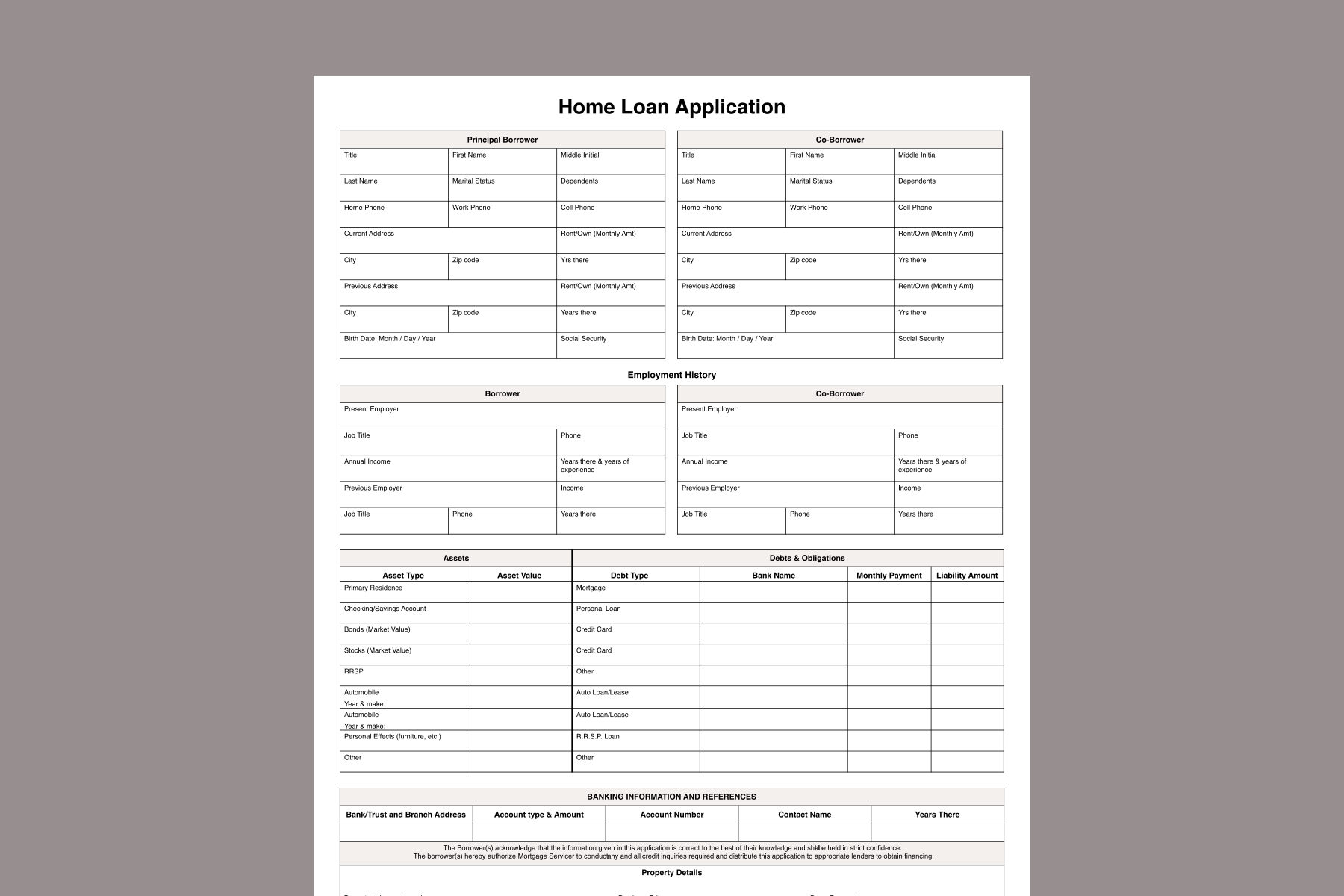
Complete the home loan application
This section explains what’s in a mortgage loan application, what lenders look for, and what you can do if your loan is denied. Loan applications can feel jargon-heavy. Swipe through to find the main sections you’ll be asked to complete.
-
Personal data
Full names, home addresses for the previous two years, and Social Security numbers (or Individual Taxpayer Identification Numbers) of all borrowers. Employment details for you and your spouse for the previous two years (employer name, address, and phone number).
-
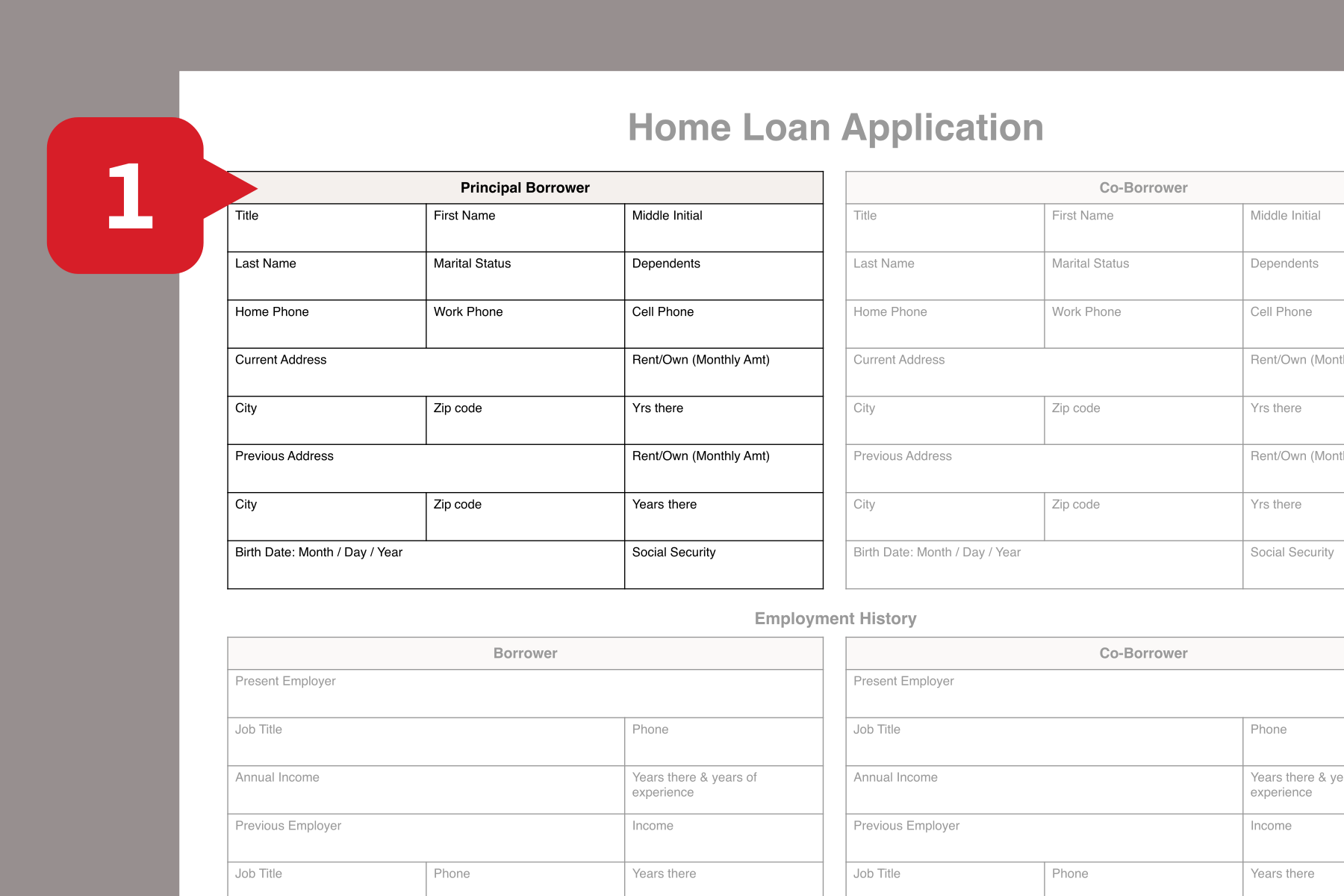
Income
Amount and source(s) of ongoing income for all borrowers.
-
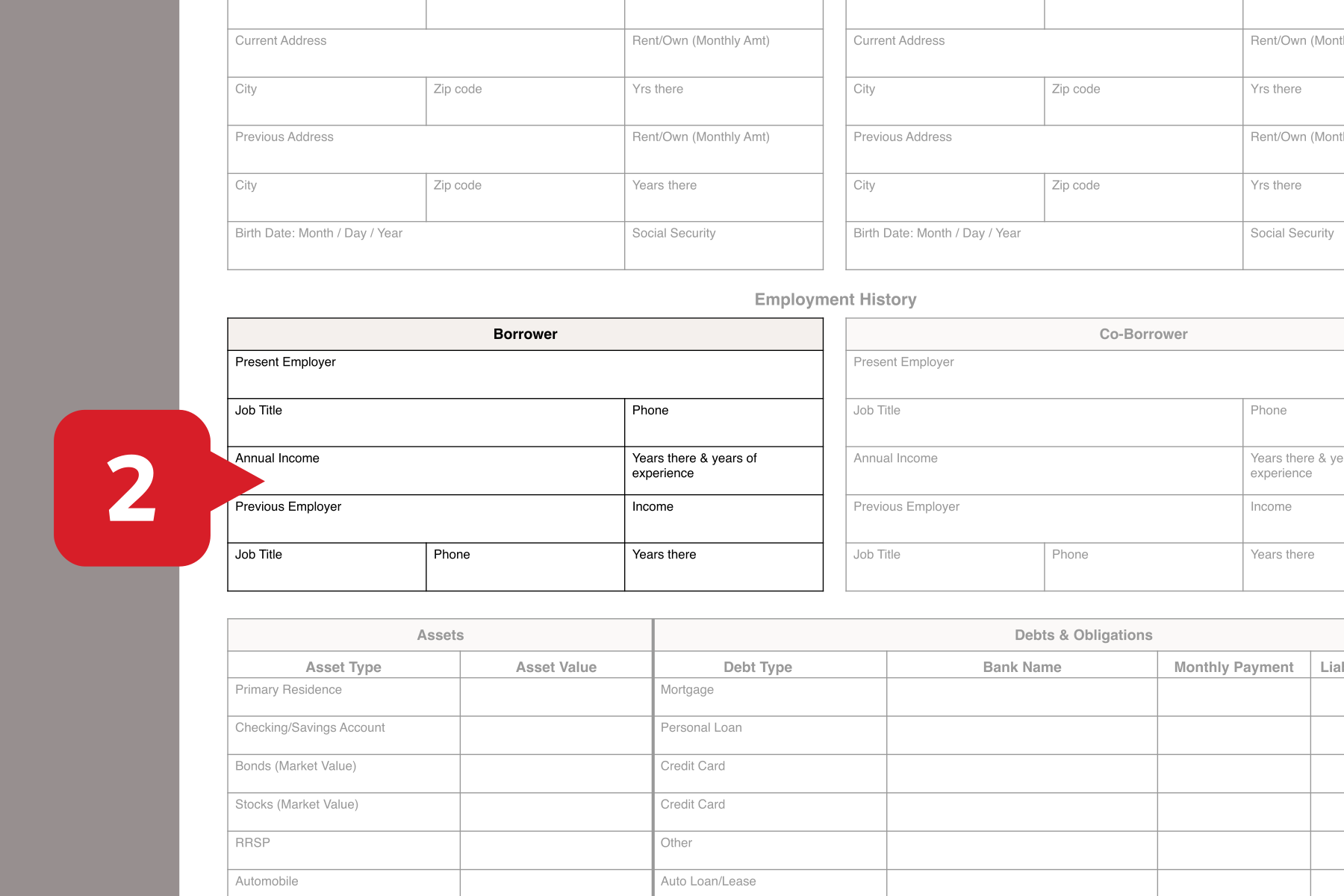
Assets
Information on assets used to qualify (checking/savings, stocks and bonds, retirement plans, and other real estate owned), including bank name, account type, and balance. You’ll also provide the source of down payment funds.
-
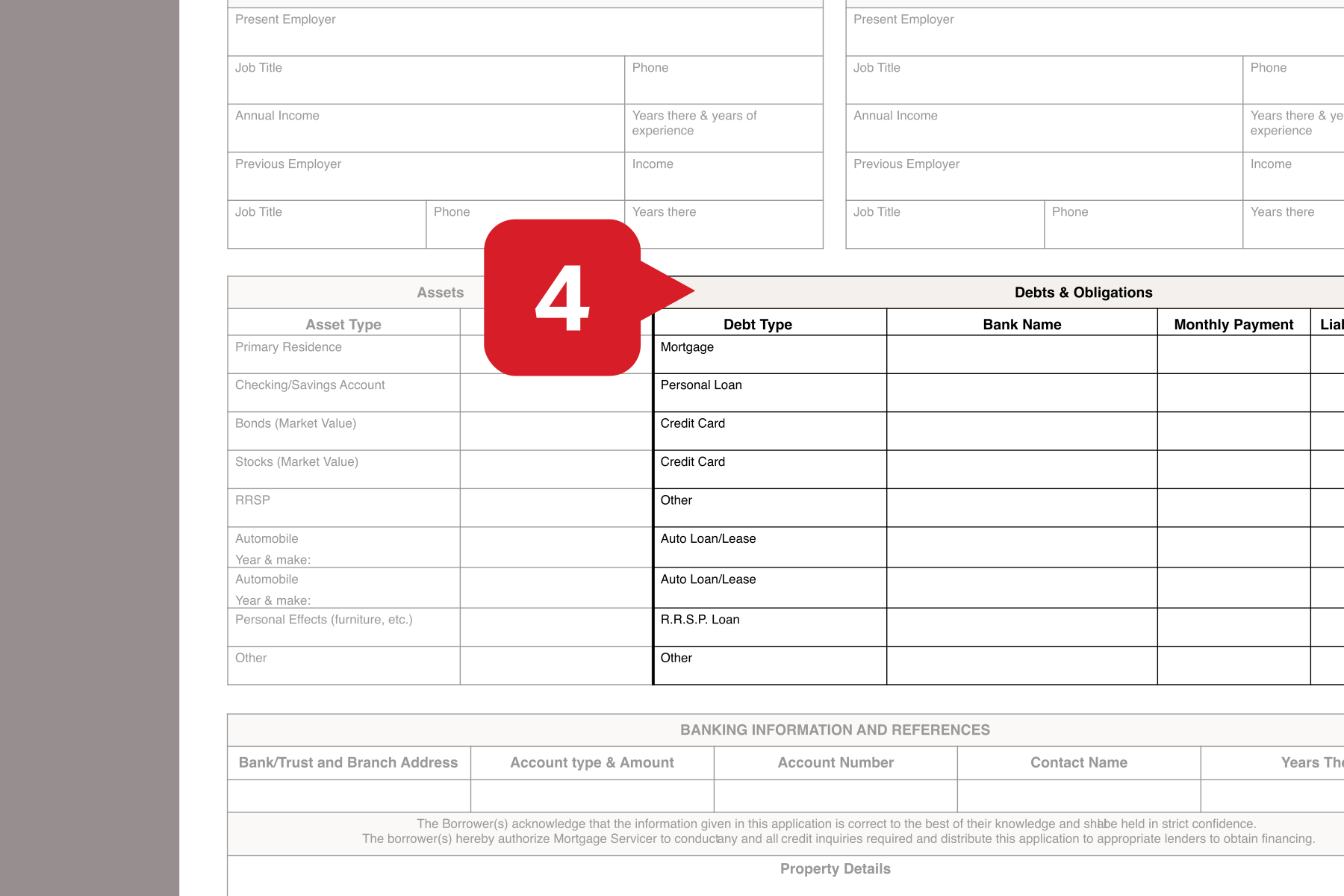
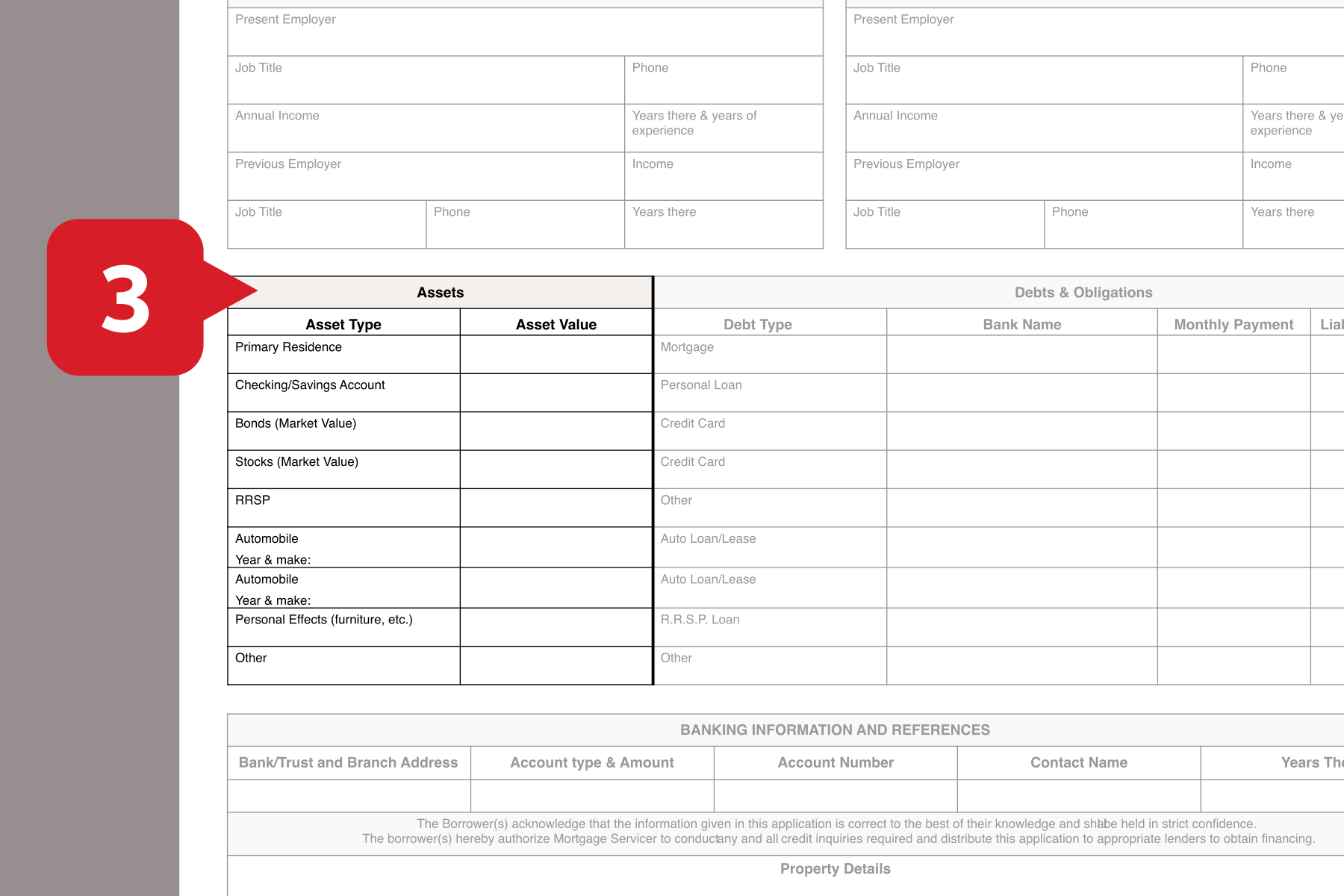
Debts and obligations
Outstanding debts and financial obligations (creditor names and balances, alimony, child support, and other liabilities). If you own real estate, you’ll list property address, market value, outstanding liens, rental income, mortgage payments, taxes, insurance, and maintenance dues. Much, but not all, of this may appear on your credit report.
-
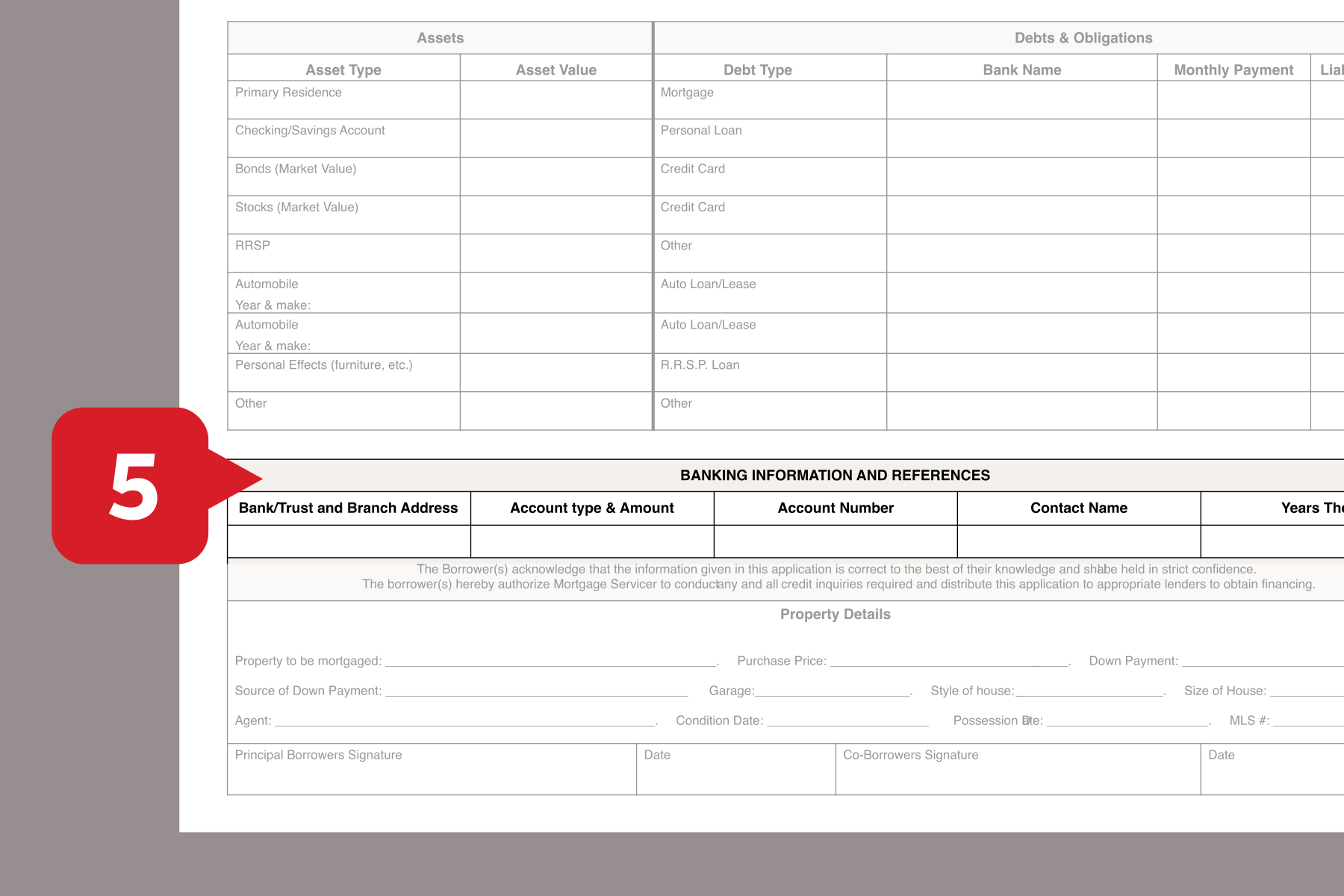
Credit references
Information about loans or debts you’ve paid, plus other references to good credit use.
-
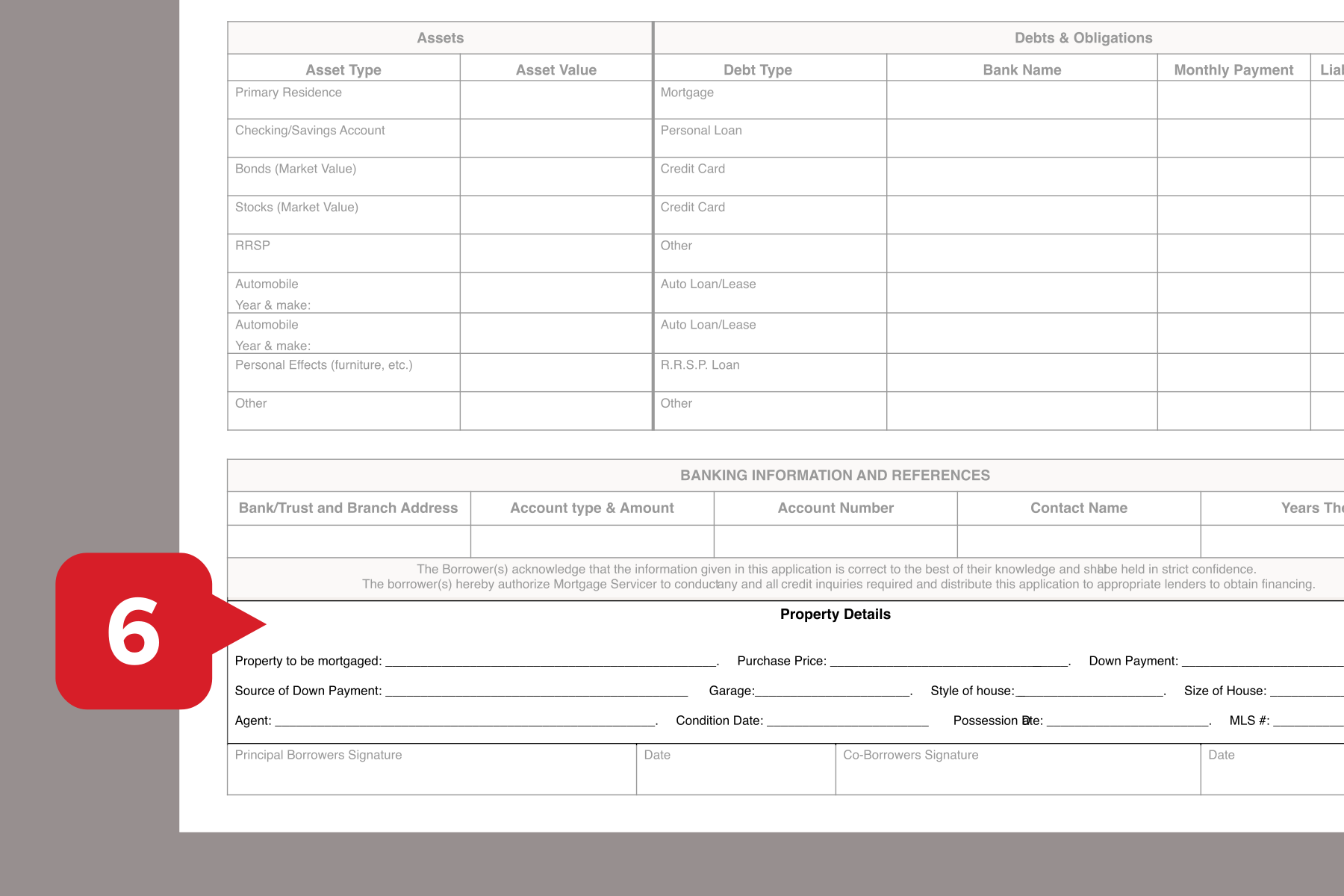
Property information
Details about the property you want to buy, if you’ve chosen one.
How lenders decide to approve you for a home loan (the 5 C’s of credit)
Lenders use different methods to decide whether to loan you money. Many look at the 5 C’s of credit, and some use “scorecards” based on the 5 C’s and other factors.
- Character: Stability (such as how long you’ve lived at your address and stayed in your job) and your track record of paying bills on time and in full.
- Capacity: Your ability to repay, often measured using your debt-to-income ratio (how much you owe compared to how much you earn). Lower ratios typically indicate more ability to repay.
- Capital: Your net worth — what you own (such as a car, real estate, cash, and investments) minus what you owe.
- Collateral: An asset (such as the home) that the lender can take and sell to repay the debt if you can’t make payments as agreed. Some lenders may also require a guarantee, meaning another person promises to repay if you can’t.
- Conditions: Outside factors that could affect your finances and ability to repay, such as what’s happening in the local economy.
Reasons a loan may not be approved
A denial can feel confusing and frustrating. Common reasons include:
- Irregular employment
- Not enough income to repay the loan
- Poor credit history (slow repayment of other loans)
- Lack of credit history
- Too short a time at residence
- Insufficient down payment
Steps you can take to have the lender reconsider
If a lender turns you down, don’t take it personally. Read about the Equal Credit Opportunity Act (ECOA) and your rights as a borrower. You can also try:
- No credit history? Ask whether factors like on-time rent or utility payments can be considered. Consider a low-limit credit card or secured card, make small purchases, and pay on time to build credit — while avoiding credit card debt.
- Ask whether all sources of income were considered.
- Pay off some existing debt.
- Find a reliable co-signer acceptable to the lender.
- Offer a larger down payment if possible.
- Ask whether the lender received credit-report information with errors, and request corrections if needed.
Home loan vocabulary (mortgage terms)
Because homes are expensive, most buyers borrow at least some of the money needed to purchase one. Knowing a few key mortgage terms can help you feel more confident as you compare loans and review documents.
Mortgage: A mortgage is a loan that helps you purchase a home. In return for the money, you promise to repay the lender over a set time period at a certain cost.
Each payment includes principal (the amount you borrow based on the home’s sale price) and interest (the cost of borrowing). Some payments also include property taxes and insurance — this is called escrow.
A mortgage loan is secured by the real estate being purchased. If you stop repaying the loan, the lender has the right to take ownership of the property and use proceeds from selling it to pay the debt.
Many banks offer home loans, and some lenders specialize in mortgage lending.
Lenders must provide a document listing estimated mortgage costs: the Loan Estimate and a Closing Disclosure.
Interest rate: The interest rate is what a bank charges someone to borrow money. It can also be calculated by dividing the interest charged by the principal amount. Example: if you pay $5,000 in interest per year on a $100,000 loan, the interest rate is 5,000 ÷ 100,000, or 5%.
A fixed-rate mortgage has an interest rate that stays the same over the life of the loan.
An adjustable-rate mortgage (ARM) has an interest rate that may change based on an index (usually the Prime Rate) or at scheduled dates to reflect market conditions.
Term: A term is the time over which a loan is scheduled to be repaid. For example, a home mortgage may have a 30-year term, meaning it must be repaid within 30 years.
Loan-to-value (LTV): Loan-to-value (LTV) is the loan amount compared to the property value. Example: an $80,000 loan on a $100,000 property is 80% LTV. If there is more than one loan, this is called the combined loan-to-value (CLTV).
Appraisal: An appraisal is a professional estimate of a property’s market value at a certain point in time. Market value is the price a property will realistically sell for based on recent selling prices of similar properties in the same area.
Closing (settlement): Closing (or settlement) is the day and time when final mortgage documents are signed and necessary payments are transferred to complete the purchase of a home.
Underwriting: Underwriting is how a lender decides whether to lend money—based on the property value, the borrower’s creditworthiness and ability to repay, and the lender’s guidelines and practices.
Be careful of predatory lending practices
Watch for unethical behavior during the loan process. Unfair, deceptive, or fraudulent practices can include:
- Encouraging you to include false information: If a lender changes your income or expense information, or leaves your income blank, do not sign the loan application.
- Asking you to sign incomplete loan documents: Never sign a loan document with missing information. Don’t work with a lender who asks you to sign documents that aren’t complete and accurate.
- “Bait and switch” sales tactics: A “bait and switch” happens when a lender makes promises to get you to agree, then backs out after the sale. Protect yourself by reading the agreement carefully before you sign. Question anything that doesn’t match what you were told, and don’t sign if anything is unclear, incomplete, or not as promised.
- Charging you to make loan payments: Some lenders may charge up to $1,000 for the “privilege” of paying biweekly. While biweekly payments can reduce total interest and shorten payoff time, these arrangements can often be set up for free or for a one-time fee of a few hundred dollars.
- Advertising and promising “No Credit? No Problem!”: These claims are often warning signs of scams. People may be led through a phony application process and even receive fake approval documents. To get the “approved” loan, they’re told to pay money up front for fees or services — and instead may lose their money and, in some cases, their homes.
- Promises to refinance to a better rate later: Don’t rely on future promises that may never happen. Ask the lender what you can do to get a better rate now.
The information contained herein is being provided as-is and without representation or warranty. The enclosed information is not intended as legal, tax or financial planning advice. Any discussion of tax or accounting matters herein (including any attachments) should not and may not be relied on by any recipient or reader. The recipient/reader should consult their tax adviser, legal consultant and/or accountant for a statement of tax and accounting rules applicable to their particular situation and for all other tax and accounting advice.
Coach’s note:
In some cases, you may need to provide additional documents to verify your income and available cash, or request that credit bureaus correct items in your credit report that you believe are inaccurate.
-
Strengthen your credit
Want help putting this into action? Get a personalized playbook for managing credit with Get Money Ready Coach.