Your credit score: What it means and how to strengthen it
Learn how your credit score impacts loans, interest rates, and financial opportunities.

A credit score is a three-digit number based on your credit report (your borrowing history). It helps companies decide whether to approve you for credit and what interest rate or terms to offer. If you’re brand new to credit, don’t worry about memorizing every rule — focus on what the score is trying to measure and a few habits you can practice every month.
What a credit score measures
Your credit score is designed to predict how likely you are to repay money you borrow. It’s calculated from information in your credit report, like your payment history, credit card balances, and how long you’ve used credit. In other words, it’s a quick summary of how you’ve handled credit so far.
Your credit report information is collected by three main credit consumer reporting agencies: Experian, Equifax, and TransUnion. You can get free copies of your credit reports at www.annualcreditreport.com. Your report might not include your score, but it shows the information that affects it, so it’s the best place to look for mistakes or surprises.
Different credit scoring models weigh factors differently. In general, here is a common breakdown of what drives your credit score:
- 35% is based on your payment history
- 30% is based on current debts
- 15% is based on credit history
- 10% is based on new credit applications
- 10% is based on types of current credit
What it does not measure: Your score is based on what’s in your credit report, not your job title, income, or how much you have in savings. That’s why someone with a high income can still have a low score if they pay late or carry high balances.
Why you might see more than one score
The three consumer reporting agencies, along with FICO (Fair Isaac Corporation), each calculate consumer credit scores. The range for credit scores is usually about 300 to 850. In general, a score between about 670 and 740 is considered good. Higher scores are considered very good or excellent, and lower scores indicate that a borrower may be seen as a higher risk to lenders.
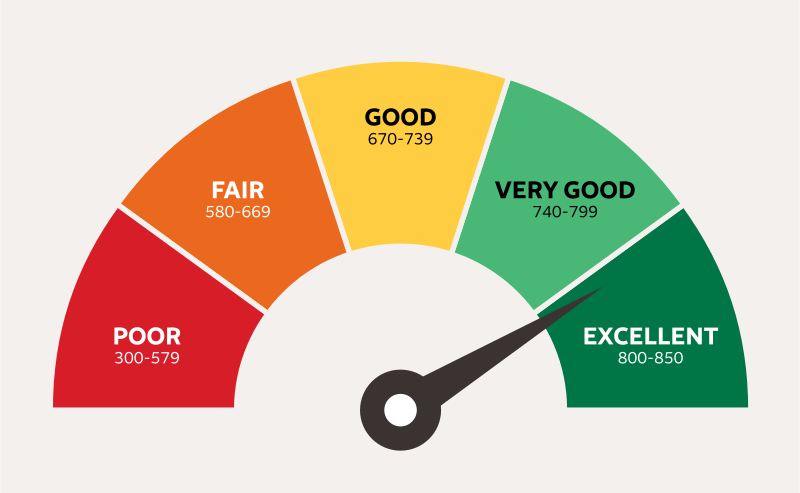
It’s normal to have more than one credit score. Different companies may use different consumer reporting agency data or different scoring models, so the number can change depending on where you check it.
Another way to think about it: a score is a snapshot. If your balances change, a new bill is reported, or a different model is used for a specific decision, the snapshot can look a little different.
If you’re tracking progress, try to follow the same score source over time instead of jumping between different score types. What matters most is the trend and the habits behind it.
How to build or improve your credit score
If you’re new to credit, focus on a few habits and repeat them every month. Most score gains come from two things: paying on time and keeping card balances low. Start there, then add the other steps when you’re ready.
- On-time payments: Do you pay at least the minimum amount by the due date? Late payments can lower a score because they suggest higher risk to a lender.
- Credit card balances: How much of your credit limit are you using? Using a smaller share of your available limit usually looks less risky than being close to maxed out.
- Credit history length: Longer histories can help because they give more information about how you manage credit over time.
- New credit: Applying for or opening several accounts close together can be a red flag, especially if your credit history is short.
- Be patient and consistent. Credit scores respond to patterns over time. If you practice the basics month after month, your score often improves gradually.
If you missed a payment: Get current as soon as you can and set up reminders (consider: calendar alerts, autopay, or email/text notifications). Then focus on making every payment on time going forward. Recent on-time payments help rebuild your credit score over time.
If you’re carrying credit card debt: Make a plan to bring balances down. Even small extra payments can help, and paying more than once during the month can keep your balance lower. As balances drop, your credit utilization rate usually improves too.
If you’re building credit from scratch, a secured credit card may help. These cards require a security deposit (often equal to the credit line), and your payment activity can be reported to the major consumer reporting agencies. To get the most benefit, treat it like a regular credit card: make small purchases you can afford, pay on time, and keep the balance low.
How to track progress: Check your credit reports periodically and watch for errors. If you also track a credit score, try to use the same source each time so you can see whether your habits are moving the number in the right direction. When you’re ready to apply for a loan or credit card, remember that the lender may use a different score — so focus on building strong fundamentals instead of chasing a single number.
-
Strengthen your credit
Want help putting this into action? Get a personalized playbook for managing credit with Get Money Ready Coach.